Think Tanks
I work at the intersection of anthropology, technology and entrepreneurship, with scholars and practitioners in academia, industry, and innovation. My research translates ethnographic and care-ethics perspectives into practical guidance for context-aware AI, particularly in maternal health. These collaborations show how the humanities can shape technology’s design, governance, and everyday use.
Rethinking Entrepreneurship and Technology in Africa
The Interdisciplinary Network for Technology and Entrepreneurship Research in Africa (INTERA) unites scholars and practitioners to examine how digital technologies and entrepreneurship shape lives, work, and business across Africa, grounded in data from ethnography, qualitative fieldwork, quantitative research and field experiments. I bring an ethnographic, relational, and data-governance lens to debates on health datafication, platform entrepreneurship, and the political economy of startups, bridging my work on archives, accelerators, and maternal-health platforms. Spanning STS, anthropology, media, communication, sociology, history, geography, management, and entrepreneurship, INTERA convenes a collaborative lab for peer feedback, mentoring, and publication support, thus catalysing Africa-focused research and transcontinental collaboration from hubs and VCs to micro-entrepreneurs and programmers.
Democratising Technology and the Internet

The Mozilla Foundation champions the internet as a global public resource rooted in users’ rights, security, and openness, pushing back against closed, monopolistic ecosystems through a participatory, community-driven ethos. After completing my Africa Mradi cohort work, I remain engaged through the Mozilla Data Collective, where I extend this mission into health and AI by identifying and addressing dataset gaps embedded in mobile technologies for pregnant people in Zambia. My role blends ethnography, critical data studies, and data-governance to surface local contexts hidden by generic models, and to translate those insights into practical improvements. This work connects research to implementation (policy notes, open documentation, and collaborative prototyping), strengthens regional capacity for context-aware AI, and advances Mozilla’s broader aim: an inclusive, trustworthy digital ecosystem that empowers users and communities across African settings.

Critical Reflections on AI and Care Ethics
When considering the fragmented health technologies across Africa, it is necessary to critically reflect on artificial intelligence as part of the Fourth Industrial Revolution and on the possible futures of hospitals on the continent. The cohort of fellows at the Institute for Humanities in Africa (HUMA) interrogates the ethical life of algorithms: whom the code serves, whose interests it advances, and which ethical principles underpin machine learning and software design. Research projects across the continent situate these questions and examine how new technologies intersect with the human body and lived experience. The scholarship reviews emerging regulatory and policy frameworks in Africa that aim to safeguard life and dignity, reduce bias, and protect sovereignty. We also situate the ethical quandaries of digital life within the idea of the ‘future hospital,’ tracing how these abstractions materialise and with what consequences.

Ethical AI
The AI Innovation Center is a think tank at the heart of Eindhoven’s High Tech Campus and home to more than 235 technology companies. Its AI Leadership Forum convenes an industry-driven community focused on advancing the industrialisation of AI in Brainport and beyond. The network brings together practitioners committed to AI for good, digital transformation, and ethics. Within the Ethics Circle, we ideated toward responsible AI practices that prevent data and algorithm misuse and ensure automated decisions are justified, traceable, and explainable. Companies across the campus with data or AI ambitions draw on insights from these circles and benefit from a wider network spanning research institutes, consultancies, and related organisations. The AI Innovation Center is co-founded by Philips, Signify, NXP, and ASML.

AI For Good Health
Education in AI for Good is essential for the next generation of engineers and technologists designing healthcare products. FruitPunch AI is a global community of data scientists, engineers, and allied professionals with internationally distributed chapters. It provides open-access resources and runs structured challenges that apply AI to real-world problems. FruitPunch AI for Health combines AI and medical data science to identify gaps in care that could benefit from AI-enabled solutions and to test those solutions with hospitals and clinics. Because health technology is too often confined to data science, engineering, and medicine, FruitPunch’s work benefits from integrating perspectives from philosophy (ethics) and the social sciences, which help assess context, suitability, and impact of proposed prototypes.

Technology in Business
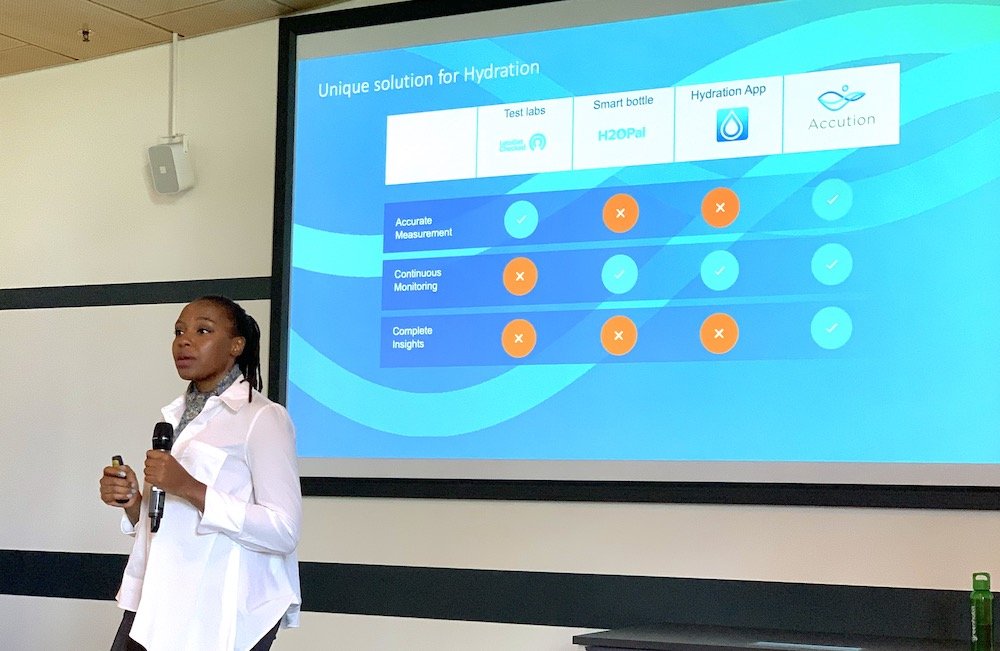
There's much to learn from companies that build and market technology, from user-experience design to the geopolitics that shape supply and demand, and what UX researchers should consider when tailoring products to people. Based at Eindhoven’s High Tech Campus, HighTechXL is a venture-building accelerator that forms teams of entrepreneurs and technical talent around advanced technologies from organisations such as CERN, the European Space Agency, TNO, Philips, and other global innovators. Before my doctoral work, I contributed to two HighTechXL startups: Accution, which explored health applications for a capacitive micromachined (ultrasonic) transducer, and InnoFlex BV, which developed titanium-dioxide photocatalytic nanomaterials to help address the Dutch stikstof (nitrogen) crisis. While tech startups are agile, they can overlook perspectives beyond the hard sciences, particularly ethics, social context, and lived user experience. Working as the only social scientist in my HighTechXL cohorts helped me identify these gaps and advocate for more responsible, human-centred innovation.